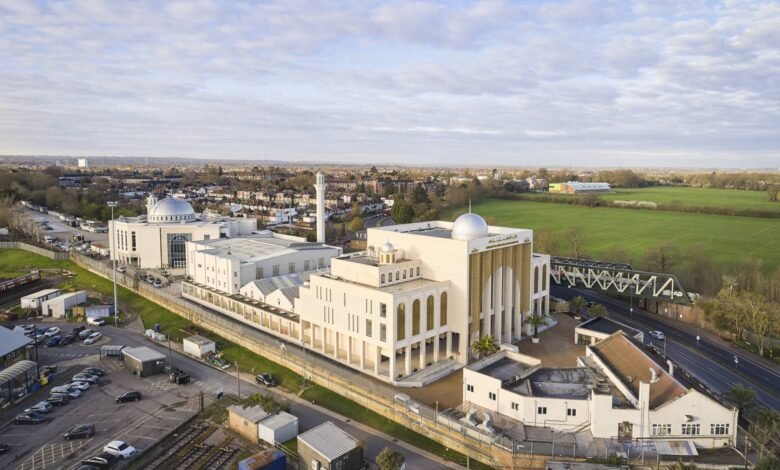
Baitul Futuh Mosque stands as one of the most remarkable Islamic landmarks in Europe, symbolizing peace, faith, and community harmony in the heart of the United Kingdom. Located in Morden, South London, this grand mosque is widely recognized as the largest mosque in Western Europe in terms of capacity. Its name, Baitul Futuh, translates to “House of Victories,” reflecting spiritual success, moral triumph, and the victory of peace over conflict. Far more than a place of worship, the mosque represents an open and welcoming vision of Islam in a modern Western society.
What makes Baitul Futuh Mosque especially significant is its role beyond daily prayers. It serves as a cultural, educational, and social hub for thousands of people from diverse backgrounds. The mosque regularly hosts interfaith dialogues, charity events, guided tours, and educational programs, reinforcing its message of tolerance and mutual respect. For visitors and worshippers alike, it offers an opportunity to understand Islam not only as a religion but as a way of life rooted in compassion and service to humanity.
In the wider context of British society, Baitul Futuh Mosque has become a powerful symbol of coexistence. Its presence challenges misconceptions and fosters understanding between communities. Whether one approaches it from a religious, architectural, or cultural perspective, the mosque remains a compelling example of how faith-based institutions can positively contribute to social cohesion in a multicultural nation.
History and Background of Baitul Futuh Mosque
The origins of Baitul Futuh Mosque are deeply connected to the Ahmadiyya Muslim Community, a global Islamic movement known for its emphasis on peace, dialogue, and humanitarian service. The vision behind the mosque was to create a landmark that would not only serve the spiritual needs of Muslims but also stand as a beacon of harmony within British society. Planning for the mosque began in the late 1990s, with a strong focus on building a space that reflected both Islamic tradition and British values.
Construction of the mosque officially began in 1999 and was completed in 2003. One of the most remarkable aspects of its development was that the project was funded entirely through voluntary donations from members of the Ahmadiyya Muslim Community. This collective effort highlighted the deep commitment of the community to establishing a place dedicated to worship, learning, and service. The mosque was inaugurated by the Fifth Caliph of the Ahmadiyya Muslim Community, drawing attention from religious leaders, politicians, and members of the public.
Over the years, Baitul Futuh Mosque has played a vital role in shaping the narrative of Islam in the UK. It has hosted national and international events, including peace conferences and interfaith gatherings, reinforcing its reputation as a center for dialogue and understanding. Its history is not just about bricks and mortar but about a continuing mission to promote peace, loyalty to one’s nation, and service to humanity.
Architectural Design and Structural Features
Architecturally, Baitul Futuh Mosque is a striking blend of traditional Islamic aesthetics and contemporary British design. The exterior is built primarily from red brick, a material commonly associated with British architecture, allowing the mosque to blend naturally into its surroundings. At the same time, classic Islamic elements such as domes and minarets give the building a distinctly spiritual identity that resonates with centuries of Islamic architectural heritage.
The mosque features a large central dome accompanied by two elegant minarets, which serve as visual focal points. These elements are symbolic, representing unity, spirituality, and the call towards prayer and reflection. Inside, the mosque is equally impressive, with spacious prayer halls, high ceilings, and intricate geometric designs. The interior layout is designed to accommodate large congregations while maintaining a sense of calm and reverence.
Functionality plays a key role in the mosque’s design. Natural light flows through carefully positioned windows, creating a serene atmosphere throughout the prayer spaces. The structure also incorporates modern facilities, including conference halls, classrooms, and administrative offices. This thoughtful combination of beauty and practicality ensures that Baitul Futuh Mosque remains not only architecturally inspiring but also highly functional for community use.
Capacity and Facilities of the Mosque
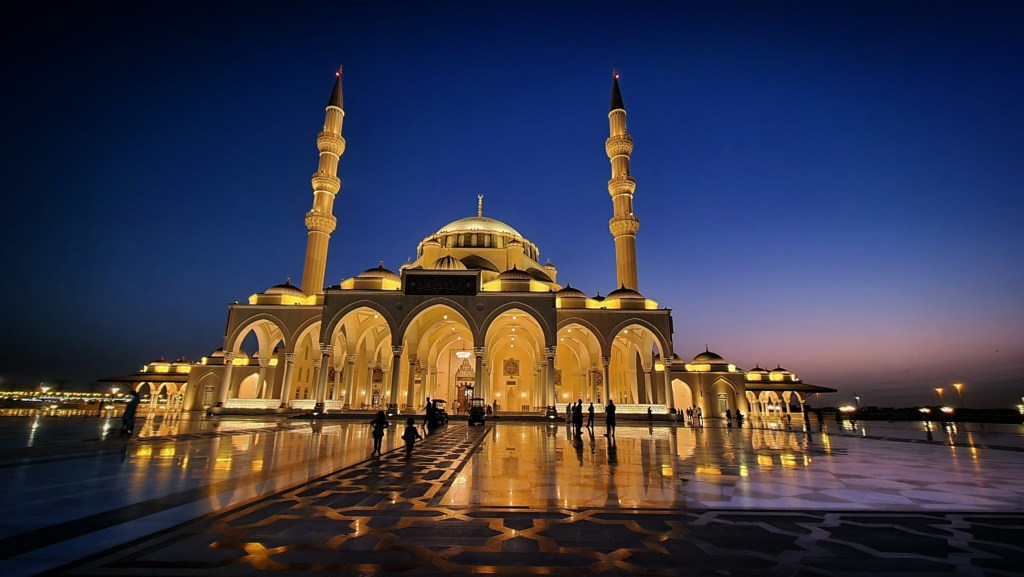
One of the defining features of Baitul Futuh Mosque is its immense capacity. The mosque can accommodate up to 13,000 worshippers at one time, making it the largest mosque in Western Europe by capacity. This allows it to host large congregational prayers, particularly during Friday prayers, Ramadan, and Eid celebrations, when thousands of worshippers gather from across the UK.
Beyond the main prayer halls, the mosque offers a wide range of facilities designed to support education and community engagement. These include lecture halls, classrooms, a library, and meeting rooms used for seminars, workshops, and youth programs. The mosque also provides dedicated spaces for women, ensuring inclusivity and comfort for all worshippers. Accessibility features, such as ramps and designated seating areas, make the mosque welcoming to elderly and disabled visitors.
The facilities extend beyond religious functions, reflecting the mosque’s broader mission. Community kitchens, charity coordination spaces, and areas for social services enable the mosque to serve as a center for humanitarian work. This comprehensive approach transforms Baitul Futuh Mosque into a multifaceted institution that addresses spiritual, educational, and social needs under one roof.
Religious and Cultural Significance
Religiously, Baitul Futuh Mosque holds immense importance for the Ahmadiyya Muslim Community and Muslims across the UK. It serves as a central place for congregational prayers, sermons, and religious education. The teachings emphasized within the mosque focus on peace, moral discipline, and devotion to God, aligning closely with the broader Islamic principles of compassion and justice.
Culturally, the mosque plays a crucial role in bridging gaps between communities. Regular open days and interfaith events invite people of all beliefs to explore the mosque, ask questions, and engage in meaningful dialogue. These initiatives help demystify Islam and counter negative stereotypes by promoting transparency and mutual respect.
The mosque also becomes a focal point during important Islamic occasions such as Ramadan and Eid, when it comes alive with spiritual energy and communal unity. At the same time, it remains deeply rooted in British society, encouraging Muslims to be active, law-abiding citizens who contribute positively to the country they call home.
Community Outreach and Social Impact
Community outreach is at the heart of Baitul Futuh Mosque’s mission. The mosque regularly organizes charity drives, blood donation campaigns, and humanitarian relief efforts, both locally and internationally. These initiatives reflect the Islamic principle of serving humanity without discrimination, reinforcing the mosque’s message of universal compassion.
Interfaith engagement is another cornerstone of its outreach efforts. Leaders from different religious traditions are frequently invited to discussions and peace conferences held at the mosque. Such events foster understanding, reduce prejudice, and build lasting relationships between communities. Educational institutions also benefit from guided tours, where students learn about Islamic beliefs, architecture, and cultural practices.
Through youth programs and volunteer opportunities, the mosque actively invests in the next generation. These initiatives encourage young people to develop leadership skills, a sense of responsibility, and a commitment to social service. As a result, Baitul Futuh Mosque has a lasting and positive impact on both the Muslim community and wider British society.
Conclusion
Baitul Futuh Mosque is far more than a religious building; it is a symbol of peace, unity, and coexistence in modern Europe. From its rich history and impressive architecture to its extensive community outreach and educational efforts, the mosque embodies a vision of Islam rooted in compassion and service. Its presence in London continues to inspire dialogue, understanding, and mutual respect among people of all backgrounds.
By opening its doors to everyone, Baitul Futuh Mosque demonstrates how faith can be a powerful force for good in society. It stands as a lasting reminder that places of worship can also be centers of learning, charity, and harmony, contributing meaningfully to the social fabric of a diverse nation.
Frequently Asked Questions (FAQs)
What is Baitul Futuh Mosque famous for?
Baitul Futuh Mosque is famous for being the largest mosque in Western Europe and for its strong emphasis on peace and interfaith harmony.
Can non-Muslims visit Baitul Futuh Mosque?
Yes, non-Muslims are welcome to visit the mosque, attend guided tours, and participate in open days.
Where is Baitul Futuh Mosque located?
The mosque is located in Morden, South London, United Kingdom.
Who built Baitul Futuh Mosque?
The mosque was built by the Ahmadiyya Muslim Community and funded entirely through voluntary donations.
What does the name Baitul Futuh mean?
The name means “House of Victories,” symbolizing spiritual and moral success.
Are guided tours available?
Yes, guided tours are available and are often arranged for schools, community groups, and visitors interested in learning about Islam.
You May Also Read: James Corden Ricky Gervais