The partridge is one of the most recognisable birds of the British countryside, often associated with open farmland, hedgerows, and traditional rural landscapes. Known for its rounded body, short wings, and preference for staying close to the ground, this bird has long been part of the UK’s natural heritage. The partridge plays an important ecological role by contributing to biodiversity in agricultural environments.
Interest in the partridge has grown in recent years due to concerns about declining populations, especially the native grey partridge. While the red-legged partridge remains more widespread due to game management, both species are frequently studied by conservationists and birdwatchers. Understanding their behaviour, diet, and habitat is essential for protecting this iconic ground-dwelling bird across the United Kingdom.
What Is a Partridge?
The partridge is a medium-sized ground-dwelling bird belonging to the pheasant family, scientifically known as Phasianidae. Closely related to pheasants and quails, it is adapted for life on the ground rather than long-distance flight. Its strong legs allow it to walk and forage efficiently through grasslands and farmland, while its short, rounded wings provide quick bursts of flight when escaping danger.
In the UK, two main species are commonly recognised: the grey partridge and the red-legged partridge. The grey partridge is native and historically widespread, while the red-legged partridge was introduced and is now more commonly seen in managed shooting estates. Both species share similar behaviours but differ significantly in appearance, habitat preference, and population trends.
Partridge Identification
Identifying a partridge in the wild requires attention to detail, particularly when distinguishing between the two main UK species. The grey partridge has a soft brown and grey plumage with a distinctive orange face and a subtle chestnut tail. It blends well into farmland environments, making it difficult to spot unless it moves or calls.
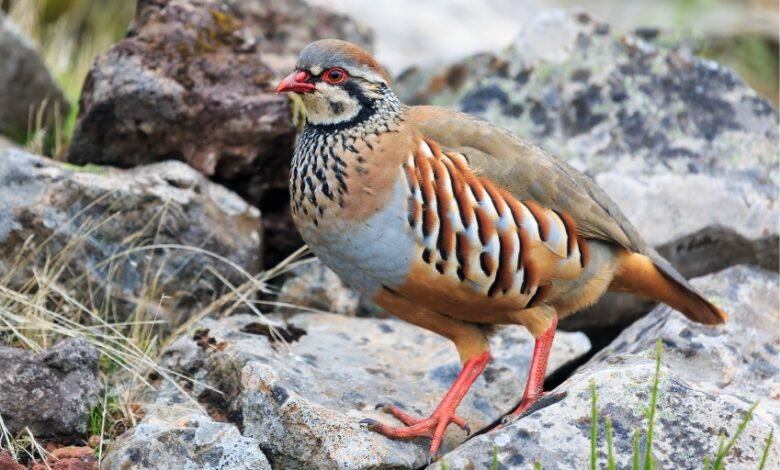
The red-legged partridge is more visually striking, with a grey body, bold black facial markings, and bright red legs that are easy to recognise. Both species are similar in size, but their colour patterns and behaviour help birdwatchers tell them apart. Partridges are usually seen walking in small groups rather than flying, which is a key identification feature.
Partridge Habitat and Distribution
Partridges are strongly associated with farmland habitats, particularly areas that include hedgerows, grass margins, and mixed crops. These environments provide both food sources and nesting cover, which are essential for survival. The grey partridge, in particular, depends on traditional low-intensity farming systems that support insect life and natural vegetation.
Across the United Kingdom, partridges are mainly found in England, with smaller populations in Scotland and Wales. The red-legged partridge is more widely distributed due to releases for game shooting purposes. However, changes in agriculture, including habitat loss and pesticide use, have significantly affected the distribution of the native grey partridge.
Partridge Diet and Feeding Behaviour
The partridge is an omnivorous feeder with a diet that changes depending on the season. It consumes seeds, grains, leaves, shoots, and a wide range of insects. During the breeding season, insects become especially important as they provide essential protein for growing chicks, helping them develop quickly and survive early life challenges.
Partridges feed mainly on the ground, often in small family groups known as coveys. They move slowly through fields, pecking at food as they go. Chicks rely heavily on insects during their early development stages, while adults shift towards plant material in autumn and winter. This adaptability helps partridges survive in changing agricultural environments.
Partridge Behaviour and Life Cycle
Partridges are social birds that form coveys outside the breeding season, offering protection against predators. During spring, pairs break away to establish nesting territories in grassland or crop fields. Courtship behaviour is subtle, involving calls and short displays before mating takes place and nesting begins.
Nests are built on the ground and carefully hidden in vegetation to protect eggs from predators. Females lay a relatively large number of eggs, increasing the chances of survival despite environmental risks. Once hatched, chicks are highly mobile and follow both parents closely, learning to forage and avoid danger from an early age.
Partridge Conservation and Threats
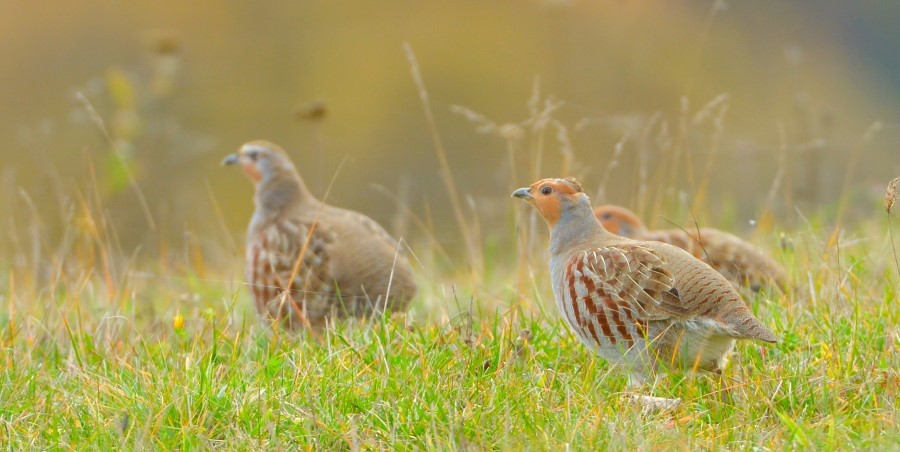
The grey partridge has experienced a significant decline in the UK due to modern farming practices. Loss of hedgerows, reduced insect populations, and intensive pesticide use have all contributed to lower breeding success. As a result, it is now considered a priority species for conservation efforts across farmland landscapes.
Conservation programmes focus on restoring suitable habitats through wildlife-friendly farming techniques. These include creating field margins, reducing chemical use, and encouraging insect diversity. While the red-legged partridge remains more stable due to managed releases, wild populations still depend on appropriate environmental conditions to thrive.
Fascinating Partridge Facts
One fascinating fact about partridges is their strong family structure. Unlike many bird species, partridge families remain together for extended periods after hatching. This close-knit behaviour helps protect young birds from predators and increases their chances of survival in the wild countryside.
Another interesting detail is their preference for staying hidden rather than flying. Partridges rely on camouflage and short bursts of flight to escape threats. This behaviour makes them difficult to spot in natural habitats, contributing to their reputation as one of the more discreet yet charming birds of the UK countryside.
Conclusion
The partridge remains a vital part of the UK’s rural ecosystem and cultural heritage. Its presence in farmland landscapes reflects the health of the environment and the balance of traditional agricultural practices. Although challenges such as habitat loss continue to affect populations, conservation efforts offer hope for long-term survival.
By understanding the partridge’s behaviour, diet, and habitat needs, we can better appreciate its role in supporting biodiversity. Protecting this ground-dwelling bird ensures that future generations will continue to experience the beauty and richness of the British countryside.
Frequently Asked Questions
What is a partridge?
A partridge is a medium-sized ground-dwelling bird from the pheasant family, known for its rounded body and preference for walking rather than flying.
Where do partridges live in the UK?
Partridges are commonly found in farmland, grasslands, hedgerows, and open countryside, particularly in England.
What do partridges eat?
Their diet includes seeds, grains, leaves, shoots, and insects, with chicks relying heavily on insects for growth.
How can you identify a partridge?
Grey partridges are brown-grey with an orange face, while red-legged partridges have red legs and bold facial markings.
Are partridges declining in the UK?
Yes, especially the grey partridge, which has declined due to habitat loss and modern farming practices.
Do partridges fly often?
No, partridges prefer walking and only fly short distances when threatened.
What is a group of partridges called?
A group of partridges is called a covey.
Why are partridges important?
They play a key role in farmland ecosystems and act as indicators of environmental health.
You May Also Read: Hannah Hampton Partner