LED strip lighting can fit into many different spaces, from residential interiors and retail displays to architectural features and exhibition areas. However, choosing the right strip is more involved than picking a color and length. Voltage, power consumption, LED type, waterproofing, installation conditions, and control options all affect the final result.
For larger projects, these details become even more important. A suitable lighting system should provide consistent brightness while matching the physical conditions of the installation. Taking time to understand these factors can also reduce installation problems later.
What Makes LED Strip Lighting Suitable for Large Projects?
LED strips are flexible and relatively easy to install, which makes them useful for applications where traditional fixtures may not fit easily. They can be placed along ceilings, cabinets, corridors, windows, signs, canopies, and architectural details.
Different LED configurations provide different levels of brightness and power consumption. For example, 3528 strips can offer a lower power option, while higher-density 2835 and 3014 strips can provide stronger illumination. COB strips are another option when a continuous line of light is preferred.
The intended application should guide the selection. Cove lighting may require a different specification from signage backlighting or outdoor contour lighting.
RGB LED Strips and Color Requirements
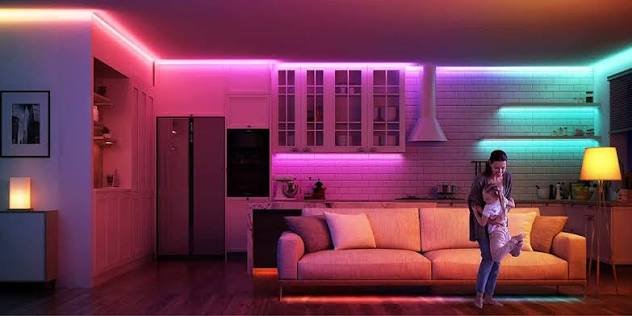
RGB strips provide red, green, and blue channels that can be combined to create different colors. They are often used where the lighting needs to change according to an event, interior design, display, or atmosphere.
A suitable controller is required to manage these colors. For example, an RGB touch controller can operate with 12V to 24V input and provide multiple color modes through touch or RF remote control. The controller’s load capacity should always match the total power requirements of the connected strip.
For projects that require flexible color effects across a larger quantity of lighting, selecting rgb led strip lights bulk requires attention to voltage, wattage, controller capacity, installation length, and connection methods rather than focusing on quantity alone.
How to Plan LED Strip Length and Power Requirements
Before installation, calculate the total strip length and its power consumption. A strip rated at 10W per meter will require a different power setup from one rated at 17W per meter.
The total load can be estimated by multiplying the strip’s power consumption per meter by the required length. It is also sensible to leave some capacity between the calculated load and the power supply’s maximum rating.
Voltage drop should also be considered. Long continuous runs can lose brightness toward the far end when the voltage available to the LEDs decreases. Splitting long installations into suitable sections and providing power at appropriate points can help maintain more consistent illumination.
Why the Power Supply Matters
The power supply is a key part of an LED installation. Its output voltage must correspond with the LED strip. A 12V strip should use an appropriate 12V supply, while a 24V strip requires a 24V supply.
The power rating also matters. If the connected LED load is too close to or beyond the supply’s capacity, the system may experience reliability problems. Installation conditions should also influence the choice, especially where the power supply will be exposed to heat, moisture, or limited airflow.
What to Look for When Choosing a Power Supply
When comparing LED Power Supply suppliers, consider more than the listed wattage. Check output voltage, rated capacity, construction, protection features, installation environment, and compatibility with the selected LED strip.
For commercial projects, technical documentation can also make installation easier. Clear specifications help installers confirm whether the power supply suits the intended application before work begins.
12V vs. 24V LED Strip Systems
Both 12V and 24V systems are widely used. The main difference becomes particularly relevant on longer installations. A 24V system generally experiences less voltage drop over an equivalent run than a 12V system, which can make it more practical for certain longer applications.
However, voltage alone does not determine the right choice. The LED strip, power supply, controller, connectors, and installation layout must work together.
Waterproof and Outdoor Installation Considerations
Outdoor lighting requires careful attention to protection ratings. IP65 and IP68 strips are available for applications where resistance to moisture is important. A waterproof strip may be suitable for architectural features, pathways, signage, or other exposed locations, depending on the actual environment.
For example, some 5050 LED strips are available with IP65 or IP68 protection. By comparison, an indoor RGBW strip may have an IP20 rating and therefore require a more protected installation location.
LED Strip Type, Heat, and Installation Surface
Heat management can influence LED performance and service life. Aluminum profiles can provide a more stable mounting surface while helping transfer heat away from the strip.
COB LED strips can be useful when a smooth, continuous appearance is required because their closely arranged light sources reduce the visible spotting that can occur with some conventional SMD strips. Free-cutting COB designs can also help with installations where standard cutting intervals create difficulties.
Common Mistakes to Avoid
Several problems can be avoided through basic planning. Do not connect an LED strip to an incompatible voltage. Do not assume that one power supply can support an unlimited length. Do not overlook voltage drop on longer runs.
It is also important to check the cutting distance before installation. Different strips have different cutting intervals. Some 5050 products, for example, can be cut according to specific LED groupings at 12V or 24V.
Waterproofing should also match the environment. An indoor IP20 product should not automatically be treated as suitable for exposed outdoor use.
Final Considerations Before Buying
The best LED strip system depends on the project rather than a single specification. Start by defining the required brightness, color, length, installation location, and operating voltage. Then calculate the total power requirement and select a compatible power supply and controller.
Shenzhen Dekingled Co., Ltd. has operated since 2014 and manufactures LED strip lighting and related products in Shenzhen, China.
The company lists technical support, fast delivery, cost-effective options, and product quality among its service advantages.
For larger lighting projects, careful planning makes the selection process much easier. Matching the LED strip with the correct voltage, power supply, controller, protection rating, and installation method can help create consistent lighting and reduce avoidable problems during installation.
You May Also Read: University of Gloucestershire Land Dispute