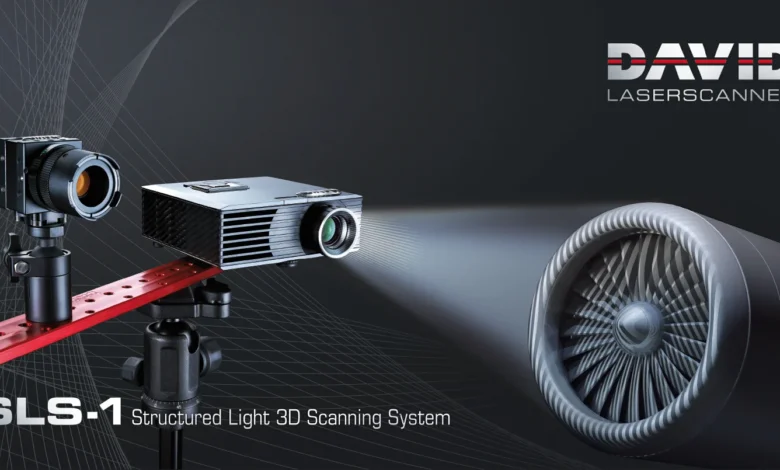
A structured light 3D scanner is a cutting-edge technology that has transformed the way industries capture and analyze three-dimensional data. Unlike traditional measuring tools, structured light scanners use light patterns projected onto an object to record precise surface geometry, creating highly accurate 3D models. This technology is widely used in engineering, manufacturing, healthcare, design, and creative industries, offering unprecedented speed, accuracy, and versatility for both professionals and enthusiasts.
Structured Light 3D Scanner plays a pivotal role in modern workflows by enabling rapid prototyping, quality control, and reverse engineering. For industries reliant on precision, these scanners reduce errors and enhance productivity. Additionally, in creative sectors, they allow for detailed digitization of objects, from sculptures to film props, facilitating virtual reproduction and visual effects. The technology’s adaptability to various object sizes, shapes, and surfaces makes it a reliable solution for a broad range of applications.
This article provides a comprehensive exploration of structured light 3D scanner, explaining how they work, their key benefits, applications across industries, and practical guidance for selecting and using these devices. Whether you are an engineer, designer, researcher, or hobbyist, understanding structured light scanning technology can help you leverage it effectively to capture, measure, and replicate real-world objects with remarkable accuracy.
Moreover, the rapid adoption of structured light scanners reflects a broader trend in digitization, precision engineering, and innovation. By integrating this technology into workflows, businesses and individuals can achieve higher efficiency, reduce material waste, and preserve physical artifacts in digital form.
How Structured Light 3D Scanners Work
Structured light 3D scanners operate on the principle of projecting a known light pattern—such as stripes, grids, or dots—onto the surface of an object. Cameras or sensors capture the way this pattern deforms over the surface, allowing the scanner to calculate depth information and surface geometry. This method is highly precise because it measures thousands of points simultaneously, producing a dense cloud of 3D data points that form a detailed digital model of the object.
The core process involves projecting light, detecting distortions caused by the object’s shape, and using triangulation algorithms to convert these distortions into 3D coordinates. Unlike laser scanners, which scan line by line, structured light scanners capture an entire surface in a single shot or multiple overlapping shots, drastically reducing scanning time and improving workflow efficiency. The result is a comprehensive 3D model with fine details and high accuracy.
Structured light scanners are versatile, capable of scanning small objects like dental molds or jewelry as well as larger industrial components. The technology is non-contact, meaning it can capture delicate or soft surfaces without causing damage. Compared to photogrammetry, which relies on multiple photographs and manual alignment, structured light scanning provides more consistent and reliable results, particularly in controlled environments.
Additionally, many modern structured light scanners incorporate real-time feedback, allowing operators to see the scanned data as it is captured. This feature ensures proper coverage, reduces errors, and improves scanning efficiency. By combining speed, precision, and flexibility, structured light 3D scanners have become indispensable tools across industries.
Applications of Structured Light 3D Scanners
Industrial and Manufacturing
In industrial and manufacturing settings, structured light 3D scanners are critical for quality control, inspection, and reverse engineering. Manufacturers use these devices to verify that parts meet precise specifications, detect defects, and ensure consistency across production lines. Reverse engineering is another key application, where existing components are digitized for redesign, replication, or modification without original CAD files.
Structured light scanners facilitate rapid prototyping by capturing physical models or clay prototypes and converting them into CAD-ready digital files. This capability speeds up design iterations and reduces the cost of trial-and-error prototyping. Additionally, tooling and part verification become more efficient, as manufacturers can quickly compare scanned models against CAD data to ensure conformity and prevent costly errors.
Medical and Healthcare
Healthcare is another sector where structured light scanners have made a significant impact. These scanners are used for creating custom prosthetics, orthotics, and implants by capturing accurate 3D representations of body parts. Surgeons and medical professionals also use 3D models for preoperative planning, simulation, and patient education.
The non-contact nature of structured light scanning is especially advantageous in medical applications, where precision and hygiene are paramount. High-resolution scans enable customization and ensure that devices fit patients perfectly, improving comfort, safety, and treatment outcomes.
Creative Industries
Structured light 3D scanning is increasingly popular in creative fields, including film, animation, and game design. Artists and designers use scanners to digitize props, sculptures, and models for virtual production, CGI, and digital archiving. Museums and cultural institutions also employ structured light scanners to preserve artwork and historical artifacts in digital form, making them accessible for research and education.
Education and Research
In education and research, structured light scanners support scientific measurement, robotics, and AI applications. Researchers use 3D models to analyze shapes, conduct simulations, and train machine learning algorithms. By providing highly accurate geometric data, structured light scanning enhances experimental precision and accelerates innovation in diverse scientific fields.
Key Features and Benefits
Structured light 3D scanners offer a combination of speed, accuracy, and ease of use that sets them apart from other scanning methods. Their high resolution allows for detailed capturing of complex surfaces, from intricate textures to smooth curves. Scanning is fast, often taking just seconds for small objects and minutes for larger assemblies, making these devices highly efficient for professional workflows.
Another benefit is non-contact scanning, which prevents damage to delicate surfaces and enables measurement of soft or deformable materials. Portability is also a factor; many modern scanners are compact and lightweight, allowing for on-site scanning and flexibility across different environments.
Compared to traditional laser scanners or photogrammetry, structured light scanners provide superior detail for certain applications, particularly for small to medium-sized objects with complex geometry. The technology also integrates well with CAD software and 3D modeling tools, enabling seamless workflows from scanning to design, analysis, or 3D printing.
Investing in structured light scanning technology delivers a high return on investment for businesses and professionals by reducing production errors, saving time, and enabling precise, repeatable results. The combination of reliability, versatility, and advanced features makes it a preferred choice in industrial, healthcare, and creative sectors.
Choosing the Right Structured Light 3D Scanner
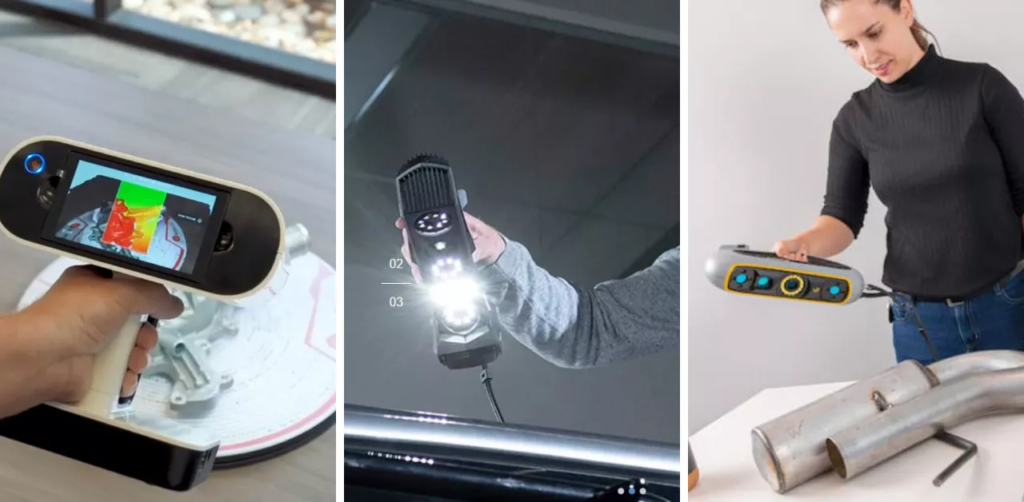
Selecting the right structured light 3D scanner depends on several factors. Consider object size, required resolution, and scanning environment. Larger objects may require a scanner with extended range, while highly detailed surfaces benefit from higher resolution and multiple cameras. Portability, software compatibility, and integration with existing workflows are also crucial considerations.
Recommended brands and models vary depending on application and budget, from industrial-grade systems for manufacturing to compact scanners suitable for labs, studios, or educational purposes. Calibration, maintenance, and training are equally important to ensure accurate and consistent scanning. A scanner that is easy to operate and integrates seamlessly with CAD or 3D printing workflows enhances efficiency and maximizes the technology’s potential.
Tips for Optimal Scanning
For the best results, ensure proper lighting and a stable scanning environment. Avoid reflective or transparent surfaces unless the scanner includes features to handle them. Object positioning, multiple angles, and careful preparation of the scanning surface improve coverage and accuracy. Post-processing software can refine scanned data, filling gaps, smoothing surfaces, and converting raw scans into usable 3D models.
Regular calibration and maintenance are essential to maintain precision over time. Following manufacturer guidelines and conducting test scans ensures reliability, especially in professional applications where accuracy is critical.
Conclusion
Structured light 3D scanners are revolutionizing industries by enabling rapid, accurate, and non-contact digitization of objects. From industrial quality control to medical applications, creative industries, and research, the technology provides detailed, high-quality 3D data with remarkable speed and efficiency.
By understanding how these scanners work, their applications, key benefits, and best practices for use, professionals and enthusiasts can leverage structured light 3D scanning to improve workflows, enhance creativity, and drive innovation. Its combination of accuracy, flexibility, and ease of use ensures that structured light 3D scanners will continue to be a cornerstone of modern 3D scanning technology for years to come.
Frequently Asked Questions (FAQs)
What is a structured light 3D scanner?
A device that projects light patterns onto an object to capture detailed 3D surface geometry.
How does a structured light 3D scanner work?
It measures deformations in projected light patterns and converts them into 3D models using triangulation.
What industries use structured light 3D scanners?
Manufacturing, healthcare, creative industries, education, and research.
How accurate are structured light 3D scanners?
They provide high-resolution, precise scans, often suitable for professional applications.
Can structured light scanners scan large objects?
Yes, but the scanner’s range and setup must match the object’s size.
How do I choose the best structured light 3D scanner?
Consider object size, resolution, portability, budget, software compatibility, and workflow integration.
What is the difference between structured light and laser 3D scanning?
Structured light uses projected patterns and cameras for fast, high-detail scanning, while laser scanners use laser beams, often slower but effective for long-range applications.
You May Also Read: Ebberston Hall