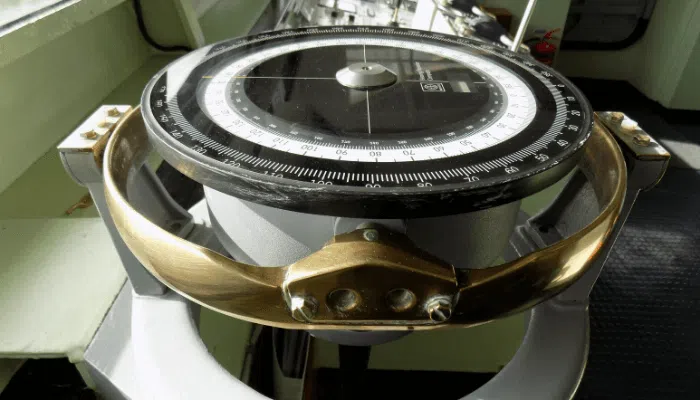
A fluxgate compass is a sophisticated magnetic navigation instrument designed to measure the direction of the Earth’s magnetic field with exceptional precision. Unlike traditional magnetic compasses that rely solely on a floating needle, fluxgate compasses utilize electronic sensing to detect magnetic field variations, providing highly accurate readings in environments where mechanical compasses may falter. These devices have become essential in modern navigation, from maritime vessels and aircraft to spacecraft and autonomous vehicles. Their reliability and accuracy make them indispensable in situations where GPS signals may be weak, jammed, or unavailable.
The importance of fluxgate compass extends beyond navigation. They are used in geophysical surveys, scientific research, and even industrial applications that require precise orientation measurements. Their electronic design allows for integration with other navigation systems, enhancing situational awareness and operational safety. In aviation, maritime, and military contexts, fluxgate compasses provide critical directional information that supports mission success and reduces navigational errors.
This article delves into the history, working principles, applications, and technological advancements of fluxgate compasses. By examining their development and functionality, we gain insight into why these instruments continue to play a vital role in modern navigation and how they are poised to evolve alongside emerging technologies in GPS, autonomous systems, and aerospace navigation.
History and Development of Fluxgate Compasses
The fluxgate compass was first conceptualized in the early 20th century to overcome limitations inherent in mechanical compasses. Traditional compasses, while simple and reliable, are prone to errors caused by magnetic interference, tilting, and friction. The invention of the fluxgate’compass revolutionized navigation by introducing electronic magnetic sensing, offering higher accuracy and resilience in challenging environments.
Early fluxgate compasses were analog devices consisting of coils and ferromagnetic cores. In the 1930s and 1940s, they gained attention in military applications, particularly in naval and aviation navigation, where precise heading information was critical for operational effectiveness. These devices allowed ships and aircraft to maintain accurate courses even in areas with magnetic anomalies or during poor weather conditions.
The 1960s and 1970s saw the transition from purely analog to more sophisticated digital systems. Digital fluxgate compasses incorporated electronic signal processing, enabling integration with autopilot systems and reducing human error. This development expanded their use beyond military applications, allowing commercial ships, submarines, and even spacecraft to utilize fluxgate technology for navigation.
Over the decades, continuous improvements in electronics, miniaturization, and sensor design have made fluxgate compasses more compact, reliable, and versatile. Modern fluxgate systems now feature high-resolution digital outputs, magnetic compensation, and integration capabilities that surpass traditional compasses, ensuring their relevance in both civilian and specialized navigation scenarios.
How a Fluxgate Compass Works
At its core, a fluxgate’compass operates by detecting the strength and direction of the Earth’s magnetic field using electronic sensors. The primary components include a ferromagnetic core, drive coils, and sense coils. The drive coils generate an alternating magnetic field in the core, which magnetically saturates the material during each cycle. When the core interacts with the Earth’s magnetic field, it induces a voltage in the sense coils, which is proportional to the magnetic field’s intensity and direction.
This induced voltage is then amplified and processed electronically to produce a precise heading. The fluxgate compass can measure both horizontal and vertical components of the magnetic field, allowing for accurate navigation even when the instrument is tilted or subjected to movement. Unlike mechanical compasses, fluxgate systems are not significantly affected by friction or inertia, making them ideal for dynamic environments such as aircraft cockpits or naval vessels.
One of the key advantages of fluxgate compasses is their ability to provide continuous, real-time heading data. Many modern systems are integrated with digital displays, autopilot systems, or GPS navigation units. This integration allows fluxgate compasses to automatically compensate for magnetic declination, vessel movement, and nearby ferromagnetic materials, maintaining accurate navigation without constant human adjustment.
By combining magnetic sensing with electronic processing, fluxgate’compasses deliver reliable directional information even in environments where conventional compasses would struggle. This technology represents a significant advancement over earlier navigational tools and remains foundational in contemporary maritime, aviation, and aerospace systems.
Applications of Fluxgate Compasses
Fluxgate compasses are widely used across multiple industries due to their precision, reliability, and adaptability. In maritime navigation, ships and submarines rely on fluxgate systems to maintain accurate courses, especially in deep-sea areas where GPS may be limited or unavailable. Submarines, in particular, benefit from fluxgate compasses as they operate underwater, where traditional magnetic compasses often fail due to interference from steel hulls and surrounding structures.
In aviation, fluxgate compasses are critical for providing heading information in aircraft cockpits. They are integrated with autopilot systems and inertial navigation units to maintain precise flight paths, particularly during long-haul flights over oceans or remote regions. Their resilience against magnetic interference ensures consistent performance, which is vital for safety and operational efficiency.
Fluxgate technology is also utilized in spacecraft and satellite navigation. By measuring the orientation relative to Earth’s magnetic field, fluxgate sensors assist in attitude control and stabilization of satellites and probes. Similarly, scientific and industrial applications such as geophysical surveys, magnetic field mapping, and robotics benefit from fluxgate’compasses, where accurate directional measurement is crucial for both research and operational tasks.
The adaptability of fluxgate compasses makes them superior to mechanical or even some modern electronic compasses in complex environments. Their integration with GPS, autopilot systems, and digital navigation platforms highlights their continued relevance in both traditional and cutting-edge navigation applications.
Accuracy, Calibration, and Maintenance
The accuracy of a fluxgate compass depends on proper calibration, environmental conditions, and system integration. Calibration involves adjusting the compass to account for local magnetic deviations, instrument offsets, and interference from nearby electronic devices. Regular calibration ensures consistent and precise readings, which is essential for critical navigation tasks.
Maintenance of a fluxgate compass is generally minimal but essential for longevity and reliability. Modern systems are enclosed to protect sensors and electronics from moisture, dust, and mechanical damage. Periodic checks for signal integrity, software updates, and verification against reference compasses or GPS systems help maintain operational accuracy.
Environmental factors such as strong magnetic fields, ferromagnetic structures, or electrical interference can temporarily affect readings. Modern fluxgate compasses often include electronic compensation mechanisms that automatically correct these deviations, ensuring navigational reliability. Proper installation, routine inspection, and adherence to manufacturer guidelines significantly enhance both performance and lifespan.
By prioritizing calibration and maintenance, operators can achieve accuracies within fractions of a degree, making fluxgate compasses indispensable in applications where precision navigation is paramount. Their ability to consistently deliver reliable heading information under challenging conditions remains a major advantage over conventional navigation tools.
Future Trends and Innovations

The future of fluxgate compasses is closely linked to advancements in miniaturization, integration, and smart navigation systems. Emerging trends include the development of compact fluxgate sensors suitable for drones, autonomous vehicles, and portable navigation devices. By reducing size and power consumption, these devices can be embedded into a wide array of platforms, expanding their utility beyond traditional maritime and aviation applications.
Integration with GPS, inertial navigation systems, and advanced avionics allows fluxgate’compasses to provide multi-layered navigational intelligence. Hybrid systems can combine satellite data with magnetic sensing to overcome limitations of each technology, ensuring accuracy even in GPS-denied environments.
Research is also focused on improving sensitivity and resilience to interference, enabling fluxgate compasses to operate effectively in urban areas, industrial zones, or near large ferromagnetic structures. Additionally, advancements in digital signal processing and AI algorithms allow for real-time error correction, predictive heading adjustments, and automated calibration.
As navigation technology evolves, fluxgate compasses are likely to remain relevant due to their reliability, precision, and adaptability. Their integration into autonomous systems, aerospace exploration, and next-generation navigation networks underscores their enduring value in a rapidly advancing technological landscape.
Conclusion
Fluxgate compasses have transformed the way humans navigate, offering precision, reliability, and resilience far beyond traditional mechanical compasses. From early analog designs to modern digital systems, they have played critical roles in maritime, aviation, and aerospace navigation. By combining magnetic field sensing with electronic processing, fluxgate compasses provide accurate real-time heading information in challenging environments where conventional tools would fail.
Their applications extend beyond navigation into industrial, scientific, and research contexts, reflecting their versatility and technological sophistication. With proper calibration and maintenance, fluxgate compasses deliver consistently accurate performance, ensuring safe and efficient operations across diverse industries.
As technology continues to advance, fluxgate compasses will evolve alongside hybrid navigation systems, autonomous platforms, and smart devices. Their ability to integrate with GPS, AI, and advanced electronics ensures that this historic yet modern instrument will continue to guide explorers, engineers, and navigators for decades to come.
Frequently Asked Questions (FAQs)
What is a fluxgate compass and how does it differ from a regular compass?
A fluxgate compass is an electronic device that measures magnetic fields to determine heading, providing higher accuracy and reliability than traditional mechanical compasses.
Who invented the fluxgate compass and when?
The concept originated in the early 20th century, with early development by scientists in the 1930s focused on precise navigation for military and aerospace applications.
How accurate is a fluxgate compass?
With proper calibration, fluxgate compasses can achieve accuracies within fractions of a degree, making them ideal for critical navigation tasks.
In which industries or vehicles are fluxgate compasses used?
They are widely used in maritime vessels, submarines, aircraft, spacecraft, industrial applications, robotics, and geophysical surveys.
How is a fluxgate compass calibrated?
Calibration involves adjusting the compass to account for local magnetic variations, sensor offsets, and interference, often using reference compasses or GPS.
What are the main advantages of using a fluxgate compass?
Advantages include precision, resilience to interference, real-time readings, adaptability, and integration with digital navigation systems.
Are there any limitations or challenges with fluxgate compasses?
Strong magnetic interference, improper calibration, and environmental factors can affect performance, though modern compensation systems mitigate these issues.
How does a fluxgate compass integrate with GPS or modern navigation systems?
Fluxgate compasses can feed heading information into autopilot, inertial navigation, or hybrid GPS systems, enhancing accuracy and reliability in complex environments.
Can fluxgate compasses be used in space or underwater environments?
Yes, they are used in submarines, spacecraft, and satellites to provide directional orientation where traditional compasses are ineffective.
You May Also Read: Ancoats Dispensary